
Agentic Engineering for WordPress
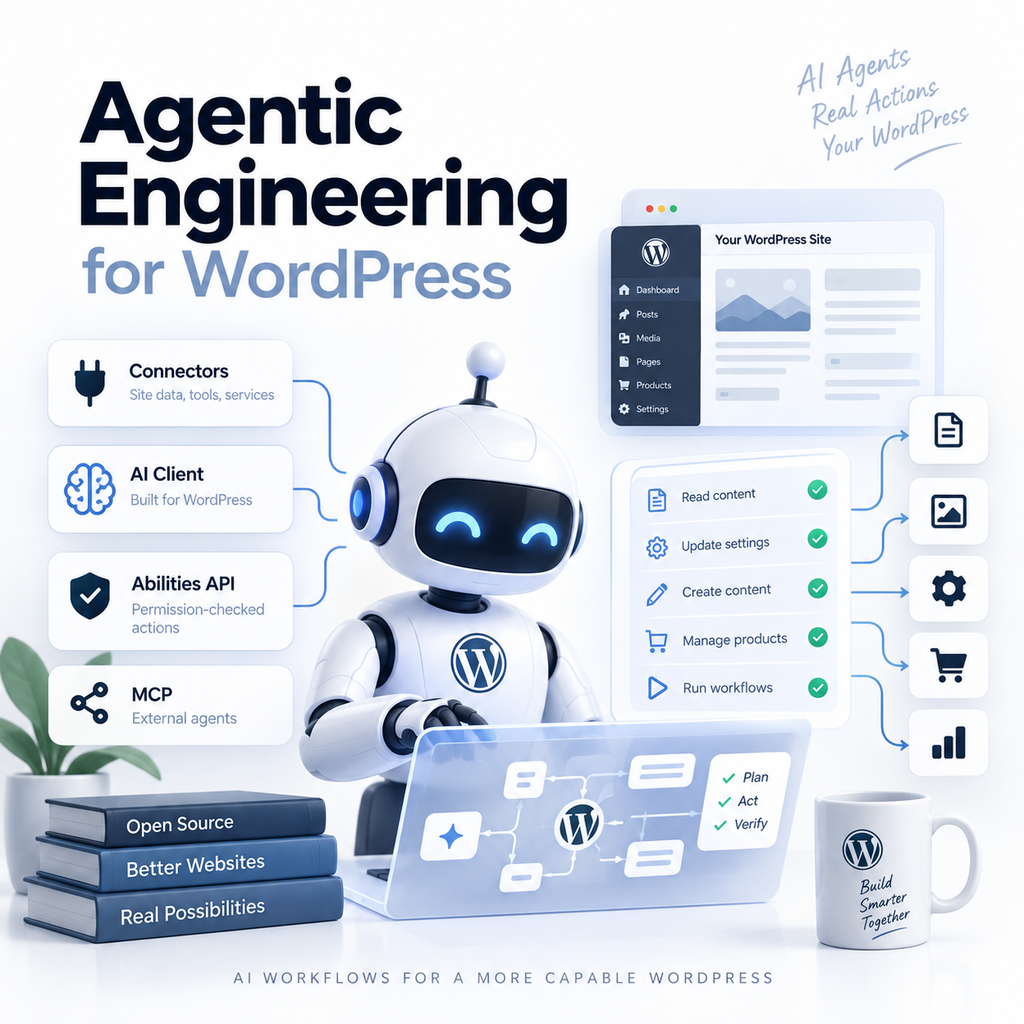
Most “AI + WordPress” offers today mean a chatbot widget or an auto-generated blog post. Agentic engineering means something narrower and more useful: AI agents that can safely read and act on your actual site — inventory, content, settings — through permission-checked contracts, not screen-scraping or hand-rolled API keys.
We build this on the same primitives WordPress core is standardizing on: Connectors, the AI Client, the Abilities API, and MCP for external agents — documented in depth in our AI Workflows section.
What this looks like in practice
- Ability-gated automation — register typed, permission-checked operations (update SEO meta, sync inventory, send a notification) that both in-editor AI and external agents can call through the same contract.
- MCP integration — expose a site’s abilities to Claude Desktop, Cursor, or a custom agent runner, so a developer or ops team can query and act on WordPress from outside wp-admin.
- Content-change assist — human-in-the-loop suggestions (SEO meta, alt text, FAQ drafts) triggered on save, reviewed before applying — not silent auto-writes.
- Custom abilities for your domain — if your business logic doesn’t map to a generic plugin, we register abilities specific to it.
Built on proof, not a slide deck
This isn’t a new practice bolted onto a portfolio — it’s the same domain-first architecture behind 4WP SEO Helper‘s planned AI-assist layer and 4WP MCP Abilities, both open source and inspectable on GitHub.
Where we stand today
This is an early, fast-moving discipline in the WordPress space — we’re building reference implementations in public rather than claiming a finished playbook. If your team wants to be early rather than reactive on agentic workflows, this is the place to start the conversation.